Research
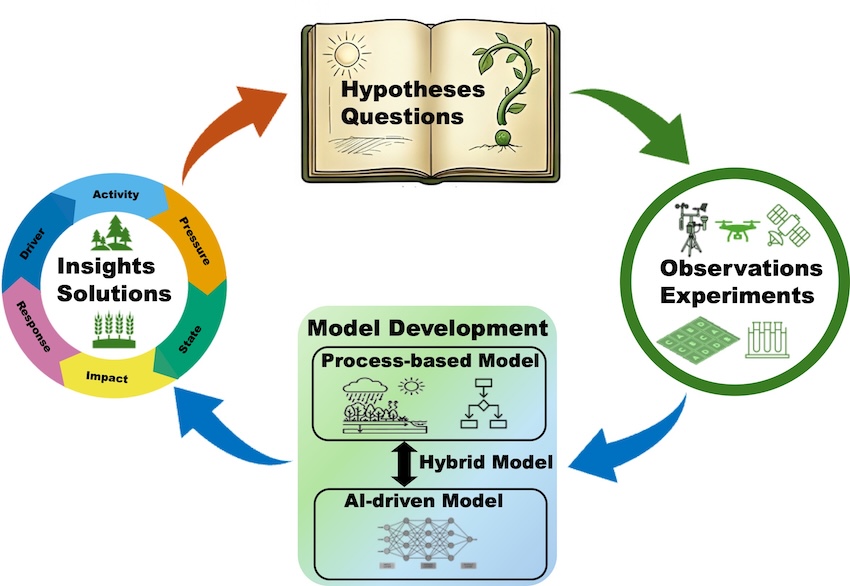
My research seeks to advance an integrated understanding of water–carbon dynamics across natural and agricultural ecosystems in a changing environment. By combining observations, experiments, and modeling within a Model–Experiment (ModEx) research framework, I aim to reduce critical uncertainties in predicting ecosystem responses. A central focus of my work is how coupled biogeochemical, hydrological, and physical processes shape ecosystem resilience and sustainability.
To address limitations of traditional models in capturing system heterogeneity and nonlinear responses, my recent work integrates artificial intelligence (AI) with process-based modeling through knowledge-guided machine learning (KGML) frameworks. These hybrid approaches encode mechanistic constraints within data-driven architectures, enabling improved predictions of biogeochemical responses, plant growth, and water use across heterogeneous landscapes.
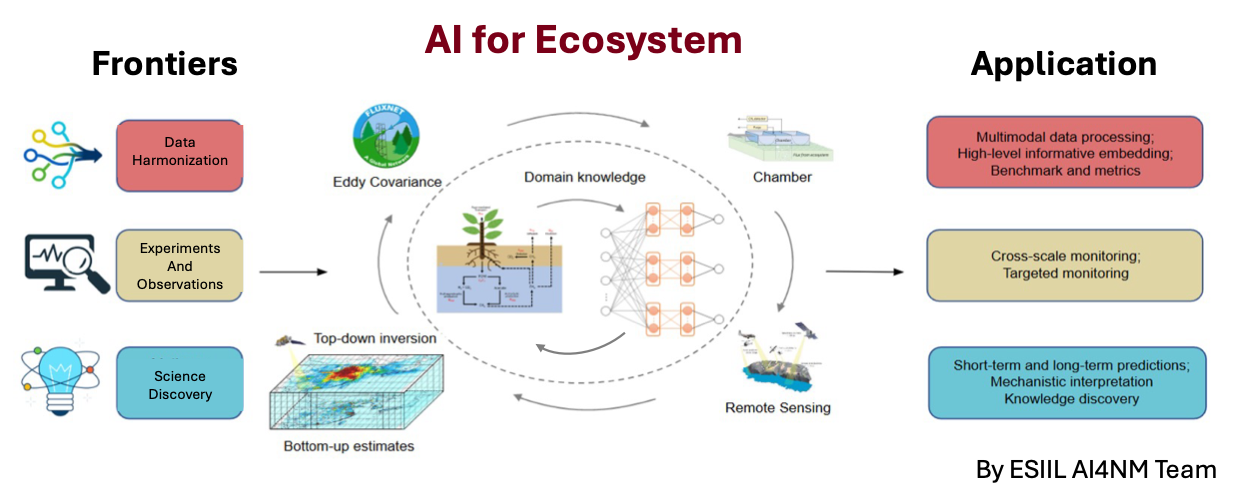
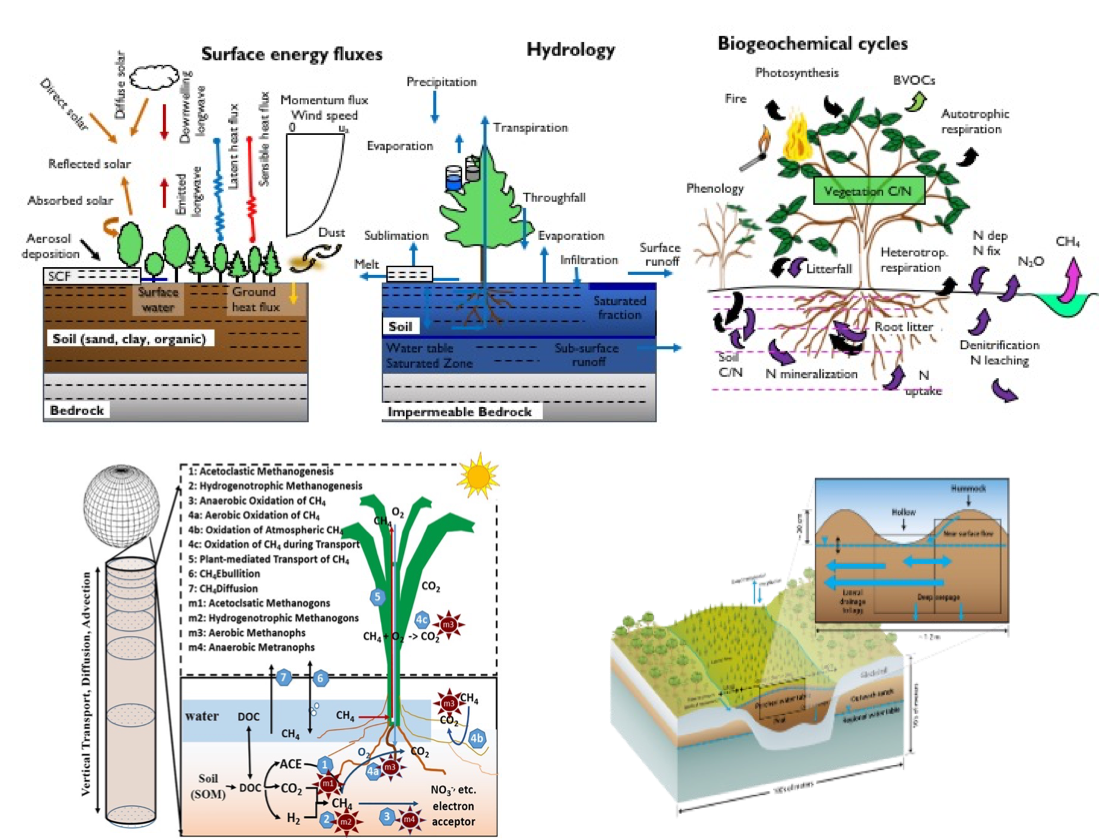
A central and sustained contribution of my postdoctoral research is improving hydrological and biogeochemical process representation in ecosystem and land surface models. I have contributed to the development of the ELM-SPRUCE modeling framework within the DOE-supported Energy Exascale Earth System Model (E3SM), improving simulations of methane dynamics by incorporating water table variability, soil hydrology, plant regulation, and microbial processes across boreal and tropical systems.
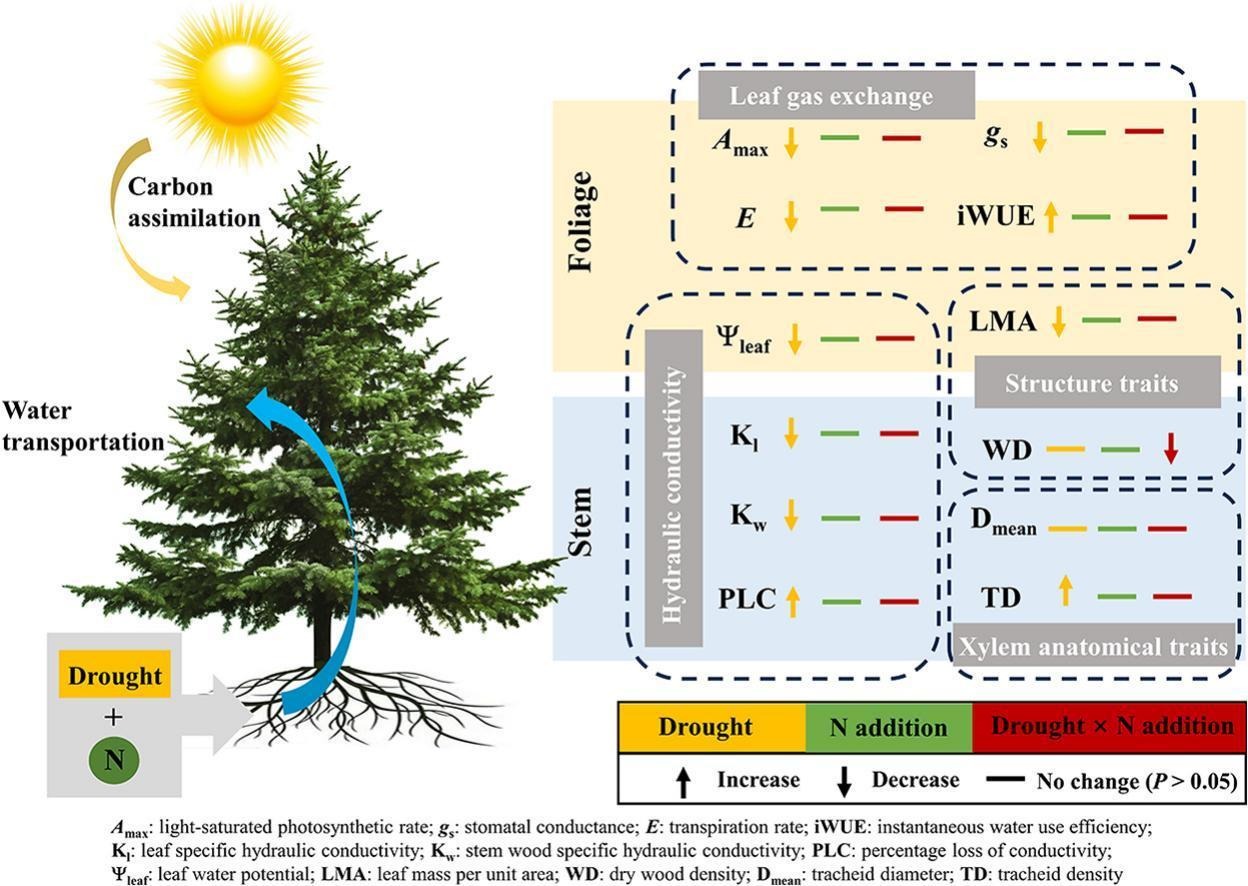
During my Ph.D. and subsequent mentoring of graduate students, I have investigated how soil moisture, nutrient dynamics, and environmental variability regulate ecosystem function across forest, wetland, and agricultural systems, using laboratory microbial and physiological analyses, photosynthetic measurements, and eddy covariance observations.